

INTRODUCTION
Blockchain technology is most simply defined as a decentralized, distributed ledger that records the provenance of a digital asset. It is a decentralized ledger of all transactions across a peer-to-peer network. Blockchain is the technology that enables the existence of cryptocurrency (among other things). It is a promising and revolutionary technology because it helps reduce risk, stamps out fraud and brings transparency in a scalable way for myriad uses. The data on a blockchain is unable to be modified, which makes it a legitimate disruptor for industries like payments, cybersecurity and healthcare, fund transfers, settling trades, voting, and many other issues.
HISTORICAL BACKGROUND AND THE EVOLUTION OF MONEY
Money, as we see and use it today, is the result of a very long process. Its physical characteristics are worthless without the value that people place on it. Standard money did not always exist and in its early ages, people utilized other forms to exchange goods and services. With the changing requirements of economies and the evolution of technology, money and payments have changed considerably. As we speak, credit card transactions and digital currencies enable people to purchase goods and services virtually, in a matter of seconds. On top of that, there are currently over 150 currencies worldwide.
Let’s briefly go into the evolution of money as it will help us to understand why cryptocurrencies and blockchain technology investments is an opportunity not to be missed.
The Barter economy

When barter was used as an exchange medium, the needs of people were very limited. The barter system has been used for centuries and it dates to 6000 BC. This trading method doesn’t involve money and it relies solely on exchanging goods and services for other services and goods in return.
Commodity Money
Similar to barter, commodity money worked under the same principle, with the only difference that societies placed different values on specific items. Common things like shells, salt, and pebbles (small stones) were looked at as commodities for exchange.
Metallic Money (coins)
As people were using commodity money more often, they identified new problems. This trading medium had three major common defects – perishability, indivisibility, and heterogeneity. Besides that, commodities were not the same in every market, and trading with other regions was very difficult.
Paper money or Representative Money

Paper currency was first developed in Tang dynasty China during the 7th century, but true paper money only appeared during the Song dynasty, in the 11th century. Marco Polo was the one that introduced the concept of paper money in Europe, during the 13th century. Paper money) was made and is currently made of materials with little to no value. The real value was backed by a bank’s promise to exchange that piece of paper for various goods, such as gold or silver.
“The United States can pay any debt it has because we can always print money to do that.” – Alan Greenspan
Credit Money
As money became the main standard and societies started to realize that living a good life is dictated by a piece of paper, life was not safe anymore. Paper money had no protection from theft and rich people were treated as targets by thieves. In response, a banking system was created.
Electronic Money or ‘Plastic’ Money
Electronic money is what we know as credit or debit cards. It is a way to store currency electronically and one can withdraw money by using an ATM. In its early stages, these cards were made of paper, with the account number and customer’s name typed.
Cryptocurrencies
The advent of cryptocurrencies that was kick-started by Satoshi Nakamoto’s Bitcoin whitepaper in 2008 is a logical continuation of our digitalization era. Cryptocurrencies fulfill all the requirements of a widely useable medium of exchange: Cryptocurrencies such as Bitcoin are fungible (no Bitcoin is different from another), hard to forge (which would require gaining control of the entire network), durable (Bitcoins can be lost, but not destroyed), easily transferable and divisible (in up to 100 million units per BTC called satoshis). And in stark contrast to central bank issued money, the supply of cryptocurrencies is programmatically well defined and limited for Bitcoin, the total number of coins in circulation will converge towards 21 million with a defined inflation pattern until the year 2140, making it a potential store of value similar to gold.
WHAT ARE CRYPTO-CURRENCIES?
A cryptocurrency (or “crypto”) is a digital currency that can be used to buy goods and services, but uses an online ledger with strong cryptography to secure online transactions.
Blockchain technology enables the existence of crypto currencies.
The most popular cryptocurrency example is Bitcoin, which had volatile price moves this year, reaching nearly $65,000 in April before losing nearly half its value in May.
There are more than 10,000 different cryptocurrencies that are traded publicly, according to CoinMarketCap.com, a market research website.
Not all cryptocurrency projects are legit and will be successful.
BITCOINS, ALTCOINS AND TOKENS
Bitcoin is considered the first cryptocurrency, founded in 2009 by a programmer (or possibly a group of programmers) under the pseudonym Satoshi Nakamoto. It ushered the new age of blockchain technology and decentralized finance.
Coins refer to any cryptocurrency that has as a standalone, independent blockchain –like Bitcoin.
An altcoin is short for “alternative coin” and as the name suggest is an alternative to Bitcoin. Several hundreds of “altcoins” have been introduces fuelling similar currency projects with unique rules and mechanisms.
Some of the popular altcoin in existence are Etherium, Cardano, Binance Coin, Ripple, Stellar Lumen, Polkadot and Uniswap.
Altcoin are highly speculative and volatile investments. Speculation is a powerful driver for the crypto markets so it’s important to do your own research before investing in any coin.
Tokens are cryptocurrencies that do not have their own blockchain but live on another blockchain. As they live on another blockhain, they benefit from its technology e.g ERC-20 tokens.
INVESTING IN BLOCKCHAIN TECHNOLOGY AND CRYTPO CURRENCIES?
As with other countries, the reason why South Africans are moving to invest in Cryptocurrencies is because of financial gains. For instance, five years ago, before August 2021, the price of Bitcoin was just $434 (6 309 Rands). But now it is over $50 000 (725 000 Rands). This implies that Bitcoin has made over 10 000% increase compared to the 31% of the JSE 40 Index. 10 000% increment means an investment of $1000 4 years ago is cashing out $100 000. The question is who does not want such massive gains in his portfolio?
Not only Bitcoin has made such incredible gains over a relatively short period of time. Many altcoins and tokens have created multi-millionaires and billionaires in a very short space of time. The number 2 crypto-currency by market capitalisation, Etherium at $1.15 in August 2015, now (at the timer of writing) Etherium is trading at $4 075, 41, this indicates 354 383% increment. Every $1000 dollars investment has been turned into over $3 million. This are the highlights of success already witnessed and there many more altcoins and tokens that have made many people fortunes and that are still in a rally. This includes Cardano, Polkadot, Doge Coin, Bitcoin, Shiba-Inu, Polygon etc.
WHERE TO BUY CRYPTOCURRENCIES?
Due to the digital nature of cryptocurrency, one of the most important things when investing in crypto is where to store it. It’s crucial that you research and analyse the various crypto wallets and exchanges on the market to ensure your crypto holdings are as safe as possible. For the purpose of this guide MPIG will provide some of the best Crypto Wallets and Exchanges accessible in South Africa. Before briefly describe some of this exchanges, it is important for any crypto investor or trader whether beginner or experienced to know that here are two types of platforms where cryptocurrencies can be bought and or sold. This are centralised exchanges and decentralised exchanges/wallets.
Centralised/Traditional Exchanges
Regulated (KYC).
Requires user deposits
Users submit buy/sell orders
Orders listed in the order book.
Exchange matches buyer and seller.
Liquidity depends on amount of orders.
Decentralised Exchanges
A part of DeFi Ecosystem.
A set of automated rules.
Executed by Independent computers.
Can’t be regulated.
Open to everyone.
No need for an account/identification.
No need to deposit funds.
Liquidity is created through Liquidity pools. Liquidity pools are shared pot of funds used by DEXs. LP – Liquidity Providers.
CRYPTO EXCHANGES/WALLETS IN SOUTH AFRICA.
When comes to selecting a crypto wallet/exchange to use in your investment or trading, there are many factors you need to consider. With so many options available on the market, all with various features, it can seem like a challenging task to narrow down the selection to the best choice for you. Mega Purpose Investment Group has done some work for you, below are some of the best crypto wallets and exchanges available to South African investors and traders.
Binance – Popular Crypto Exchange with Highly Safe Crypto Wallet
Binance is one of world’s largest crypto exchanges, and it offers one of the best crypto-wallet in South Africa through its user-friendly trading platform. Binance users can invest in crypto from as little as 0.1% commissions – one of the lowest available on the market and these commissions can be reduced even further if you utilise their Binance Coin digital currency. In terms of their crypto wallet, Binance offers users protection through their Trust Wallet feature. This is one of the best crypto wallets apps on the market, as it is entirely free with no hidden charge. Binance supports over 40 block chain types, which equates a very high amount of cryptos and tokens. Furthermore, the Binance Crypto Wallet (Trust Wallet) is decentralised, you will own your private keys, which means you are the only person that can access the holdings. Coin base – Easy-to-Use crypto Wallet with Advanced Security Features
Coinbase is also among the best crypto investing and trading well-known across the world for its beginner-friendly and easy to use features. In terms of fees, Coinbase utilises a spread-based system and typically charge a spread of 0.5% for buy and sell orders; however, this can be reduced when trading more significant sums. Coinbase crypto wallet can be downloaded onto your smartphone from the App Store or Google Play, allowing you to store your crypto holdings on your device. It offers a ‘Secure Enclave’ system for safeguarding your crypto alongside biometric authentication technology. Crypto can also simply transferred by users by using their Coinbase username – meaning it is quick and easy, unlike in some other trading platforms.
Luno – South African Trusted Crypto Exchange
Luno offers relatively low fees for crypto trading in South Africa and does not charge any fees for withdrawing ZAR. Luno’s crypto wallet is available on Android, iOS and the web. It’s free to use and allows users to buy and sell crypto directly within the wallet app. Luno highlighted that the wallet employs ‘the world’s most sophisticated Bitcoin security and has never been compromised’. Over the past decade Luno has taken the world by storm, its already operating in over 40 counties worldwide. When these facts are put together, this wallet can be considered one of the best Bitcoin and Etherium wallets apps available in South Africa.
Altcoin Trader
Altcoin trader is an online cryptocurrency exchange based in South Africa. The platform as built with a specific focus on the domestic marketplace, and it’s one of the very few platforms that allows you to buy and sell cryptocurrency in ZAR. Altcoin Trader will give you access to a variety of digital coins ranging from large cap projects like Etherium and Bitcoin and spread to small caps like Namecoin and SHIB. The Altcoin Trader team aims to build a cryptocurrency investment process that is simple for those in South Africa by supporting several payment types. This includes local bank transfers, credit card deposits via Zapper, and instant EFT (OZOW).
Apart from the above mentioned crypto exchanges and wallets, there a lot more crypto exchanges and wallets available to South Africans and some of them are listed below.
Atomic Wallet – Crypto wallet and Exchange.
Meta Mask – Etherium Wallet. For safekeeping of Etherium and ERC20 tokens.
Exodus
Kraken
Coinmama
FXVC
Libertex
Gemini
TECHNICALS IN PURCHASING CRYPTO
INTRODUCTION
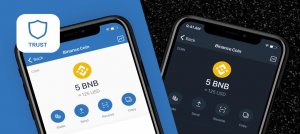
Bitcoin and most other cryptocurrencies can’t be purchased through your local bank or investing firm yet, though some organisations are working toward that possibility in the future. For the time being now, you’ll have to go through a cryptocurrency walle or trading platform to exchange your fiat for Bitcoin or other digital currencies. There are a number of technicals that do exist in the purchase of crypto that you might not have been used to in traditional banks. The technical also do vary depending on the crypto wallet and the type of the exchange. There is risk of losing your crypto completely if you don’t understand the technical in the purchase of these tokens/coins or at least you should purchase with the help of an investment advisor. This guide will not detail each and every step that should be followed foe each and every crypto token/coin for the various exchanges and wallets across the world. For the purpose of demonstration, two tokens Safemoon and Shibainu have been selected and an outline on how they are purchased on the Trust Wallet (Binance Exchange Wallet) has been provided.
PURCHASING SAFEMOON.
Open Trust Wallet Account.
Buy BNB- $50 usd minimum purchase on Trust Wallet.
Take note when buying a coin on TW you need to be verified buy a third party service providers such as Mercury, Simplex.
Exchange BNB for Binance Smart Chain (BSC) (you won’t be able to exchange/swap 100% due to network fees.
Go to DApps and select/search PANCAKE Swap.
BSC is used as the primary compatibility token between Trust Wallet & PANCAKE Swap.
Exchange BSC (Smart Chain) for SAFEMOON.
Safemoon charges 10% on each transaction.
Add safemoon to Trust Wallet to see your moons.